We still have 27 years ahead of us to proceed with the decarbonization of the industrial sectors and to implement the necessary tools that will allow companies in our country to become a sustainable resource, with lower emissions and with a more profound awareness about climate resilience. Climate resilience is understood as the ability of human beings to become aware, take responsibility and apply practices to moderate the damage caused by climate change, not only reducing carbon emissions, but also creating a collective consciousness that strives so that the negative impact does not worsen. At the same time, being able to benefit from the opportunities that can be extracted from climate change would completely optimize this concept.
With the Paris Agreement, it is expected that the European Union will be the first society to limit global warming by 2050.
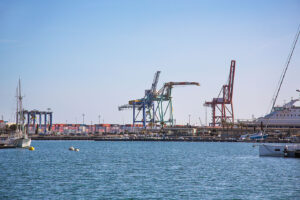
As was expected, the use of sustainable fuels has already been implemented in maritime transport. The reduction of emissions from ships is irrevocable given that the International Maritime Organization (IMO) not only states that energy efficiency has been improved by 21% but that thanks to a program of exhaustive monitoring measures, reduction will be achieved, lowering emissions by 50% by 2050.
In 1997 the first control measures on carbon dioxide emissions from ships and greenhouse gases were adopted, along with other energy efficiency proposals. Currently, after the Paris Agreement and with the reality we are faced with, when this commitment becomes a peremptory challenge.
Will an emissions-free European global economy be possible?
The gauntlet has been thrown!