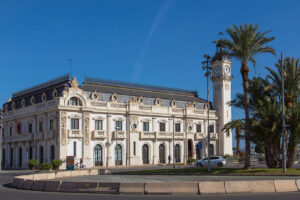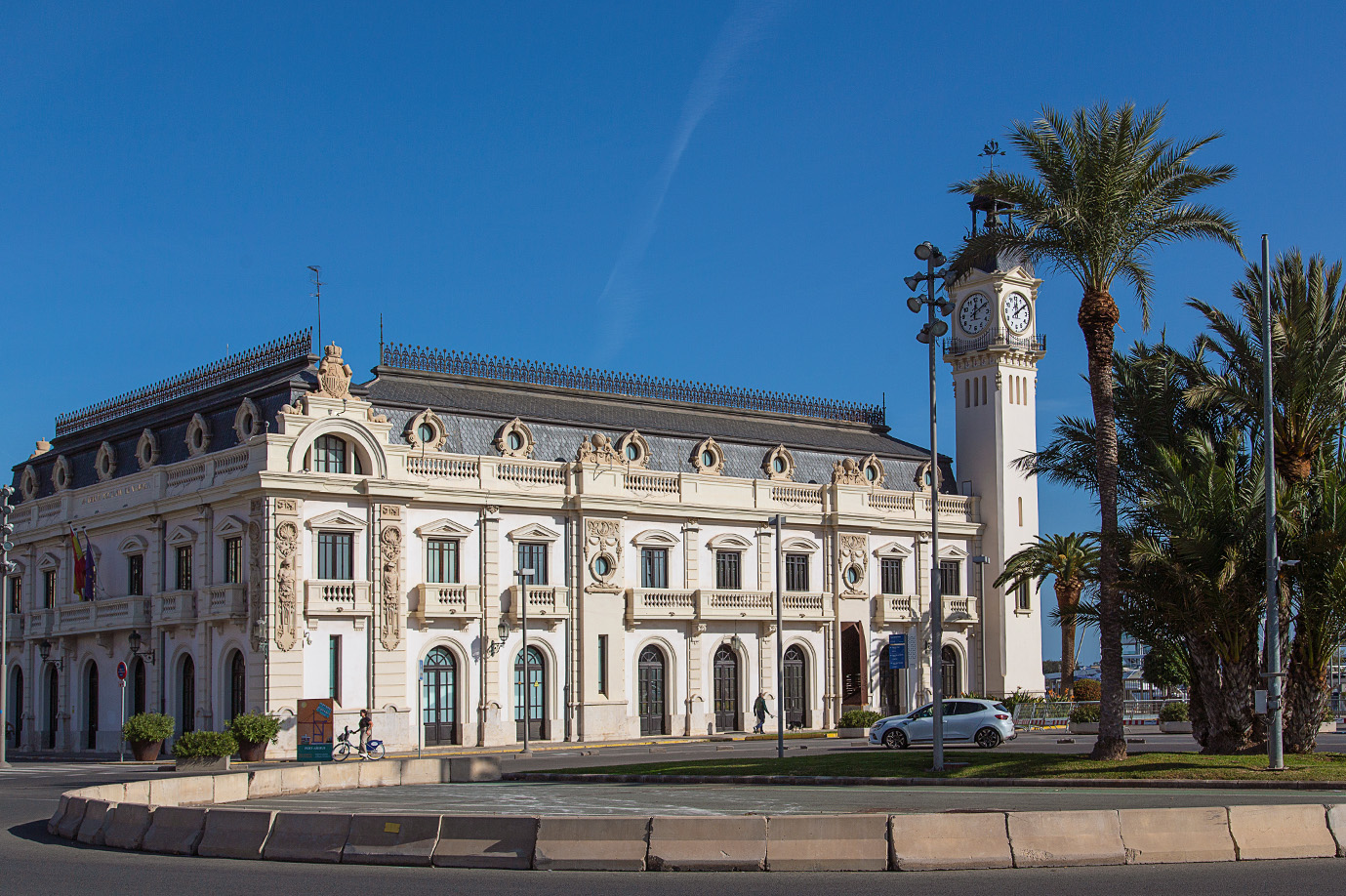
Built in 1916 and designed by architect Francisco Mora Berenguer, the Clock Building is not only a building declared an asset of Local Relevance, but a distinctive and emblematic symbol of our port. It is not a building of large dimensions, but of great architectural and cultural value.
Apart from being simply neoclassical, light colour, smooth façade, a simple division of its heights and a tower housing a clock, the headquarters of the port authority of Valencia may be found inside this highly characteristic building. The clock building is a small jewel of great emotional value for Valencians and one of the few that remain commemorating the former splendour that the Port of Valencia once had. (Not understanding the port as a mere place of business, but rather the vibrant area that the Avenida del Puerto was at that time, buoyant and alive, with a notable community life and rich in small local businesses that were strangled after road works creating a one-way street in 2005). Near the storage sheds and old customs offices, you will come across the clock crowned by the side tower, which at sunset reflects the Mediterranean sun on its hands, strategically placed towards the water.
Its modernist style, with the tower at one end and with decorative slate in the upper part, breaks with Valencian Modernist tendency of other buildings in our city, but the touch of dark slate gives the building a certain sobriety and elegance.
If you visit Valencia… It is not to be missed!