Since the dawn of humanity, the sea has been an open door to trade, exploration, and cultural exchange. The earliest civilizations understood that maritime routes were essential for connecting distant territories. Phoenicians, Greeks, and Romans used the Mediterranean sea as a true commercial corridor, where goods, ideas, and cultures travelled from port to port.
Over the centuries, these routes expanded to even more distant horizons. The famous Silk Road, primarily known for its overland connections, also had a maritime component: a complex network linking Asia with the Middle East, Africa, and Europe via the Indian Ocean and the Red Sea. Spices, silk, porcelain, and other valuable goods reached Europe after journeys that could last months or even years.
The discovery of new oceanic routes in the 15th and 16th centuries further boosted global trade, although voyages remained long and uncertain. It was not until the arrival of steamships in the 19th century, and later motor-powered vessels, that transit times began to decrease significantly. The opening of strategic canals such as Suez (1869) and Panama (1914) ultimately revolutionized global navigation.
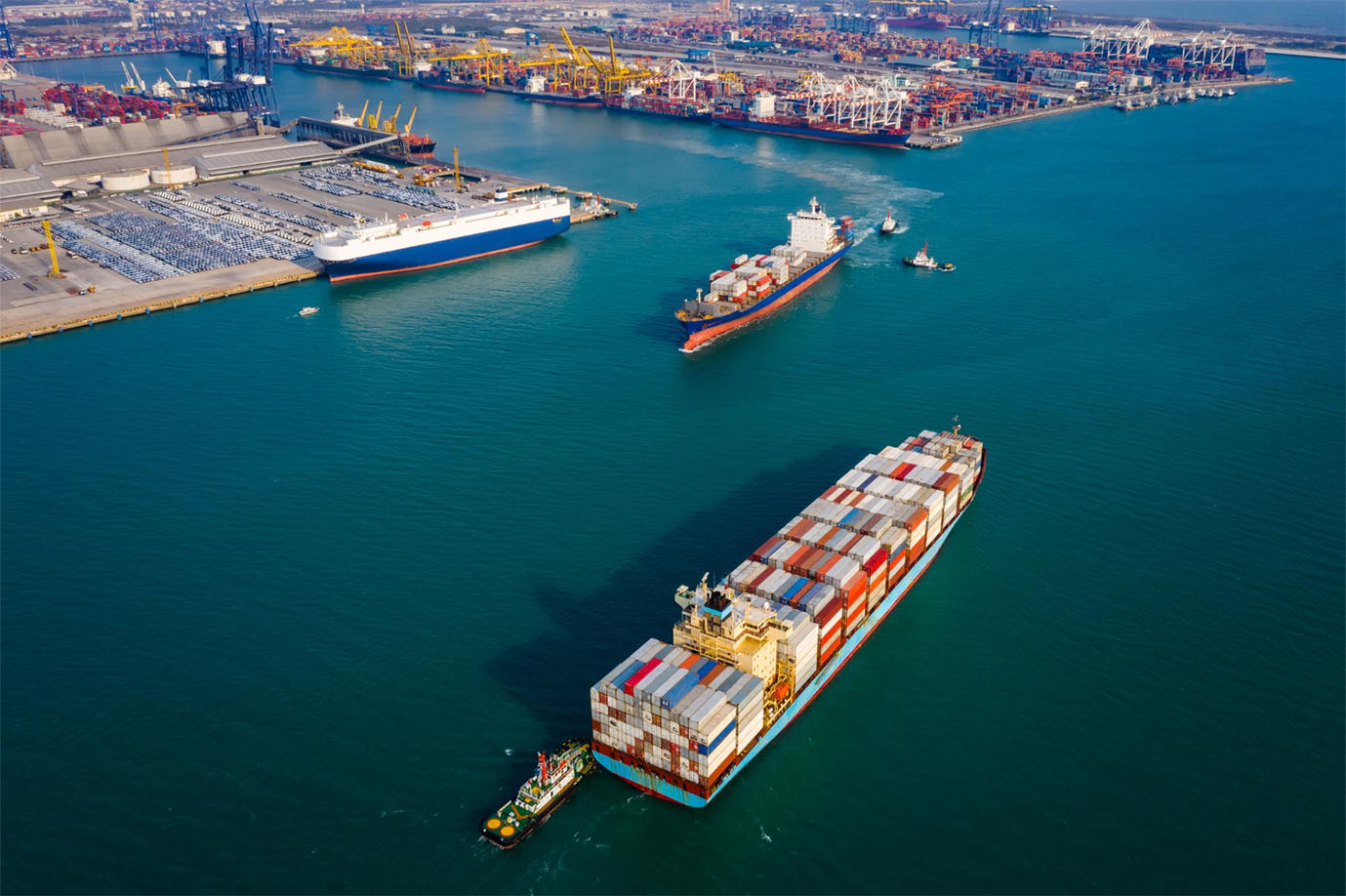
Today, those times seem very distant. Thanks to container ships, digitalization, and modern logistics, intercontinental journeys can now be measured with precision. Maritime transport continues to be the backbone of international trade, moving more than 80% of global goods by volume and nearly 70% by value. Moreover, it is one of the most efficient modes in terms of energy consumption and emissions per ton transported, establishing itself as the most competitive and sustainable option for global commerce.